Safety shoes are essential protective equipment for workers, particularly in sectors such as transport (lorry drivers, delivery drivers, forklift drivers, hauliers, etc.). It is therefore legitimate to ask whether these shoes are suitable for driving. In this article, we take a detailed look at the characteristics and specific features of safety footwear, the different types of toe caps available, and then address the question of their compatibility with driving.
characteristics and specific features of safety footwear
Safety footwear is designed to provide maximum protection for the feet of workers exposed to a variety of hazards, such as falling heavy objects, crushing, punctures, etc. Their robust construction, non-slip soles and resistance to a variety of environmental conditions make them essential equipment in high-risk workplaces.
When it comes to driving, it's vital to choose shoes that also offer a good level of comfort and increased sensitivity to the pedals. Models with thin, flexible soles provide better pedal feel and more precise control.
In this context, it is important to stress that driving with the right safety footwear is not only safe, but also complies with the Labour Code.
Drivers of professional vehicles such as pallet trucks, cranes, stackers and diggers must pay particular attention to safety rules. Rigorous training is required so that they can use these vehicles with care, both for their own safety and that of their colleagues in the vicinity. Approved drivers are exposed to many risks, including those associated with poor visibility, travelling, noise and sometimes weather conditions. So it's crucial that they feel comfortable in their safety shoes, especially when manoeuvring a motorised machine in their working environment.
the different types of end cap
Protective toe caps are an essential component of safety footwear, providing added safety for the feet. Their primary function is to protect the toes from falling objects (impact) and crushing (e.g. being run over by a piece of construction equipment). There are two types of toe cap: metallic and non-metallic. Each material has different properties, such as conductivity or thinness.
Whatever the normative marking (S1, S1P, S2, S3) or the type of toe cap (steel, composite, aluminium, carbon, etc.), the requirements of standard EN ISO 20345 are always the same: they must all meet the same resistance threshold (impact resistance for an energy of 200 joules). The protective toe cap is one of the main components of a safety shoe. It is what differentiates safety footwear (EN ISO 20345) from work shoes without toecaps (EN ISO 20347), or from simple street shoes.
The protective toecaps fitted to safety footwear (EN ISO 20345) are resistant to 200 joules.
The choice of toe cap will depend on the type of work and the specific risks to which feet are exposed. It is therefore crucial to take these factors into account when buying safety shoes.
Choosing the right safety footwear for the transport sector
CRITERIA TO BE TAKEN INTO ACCOUNT
When it comes to the transport environment, choosing the right safety footwear is of paramount importance. If you frequently get in and out of your vehicle, opt for shoes that are easy to put on and flexible. Also make sure they offer good grip with a slip-resistant sole (SRC or SR) to prevent slipping on potentially dangerous surfaces, such as wet or greasy floors.
Our recommended PARADE models:
> SLALUM, protection with style
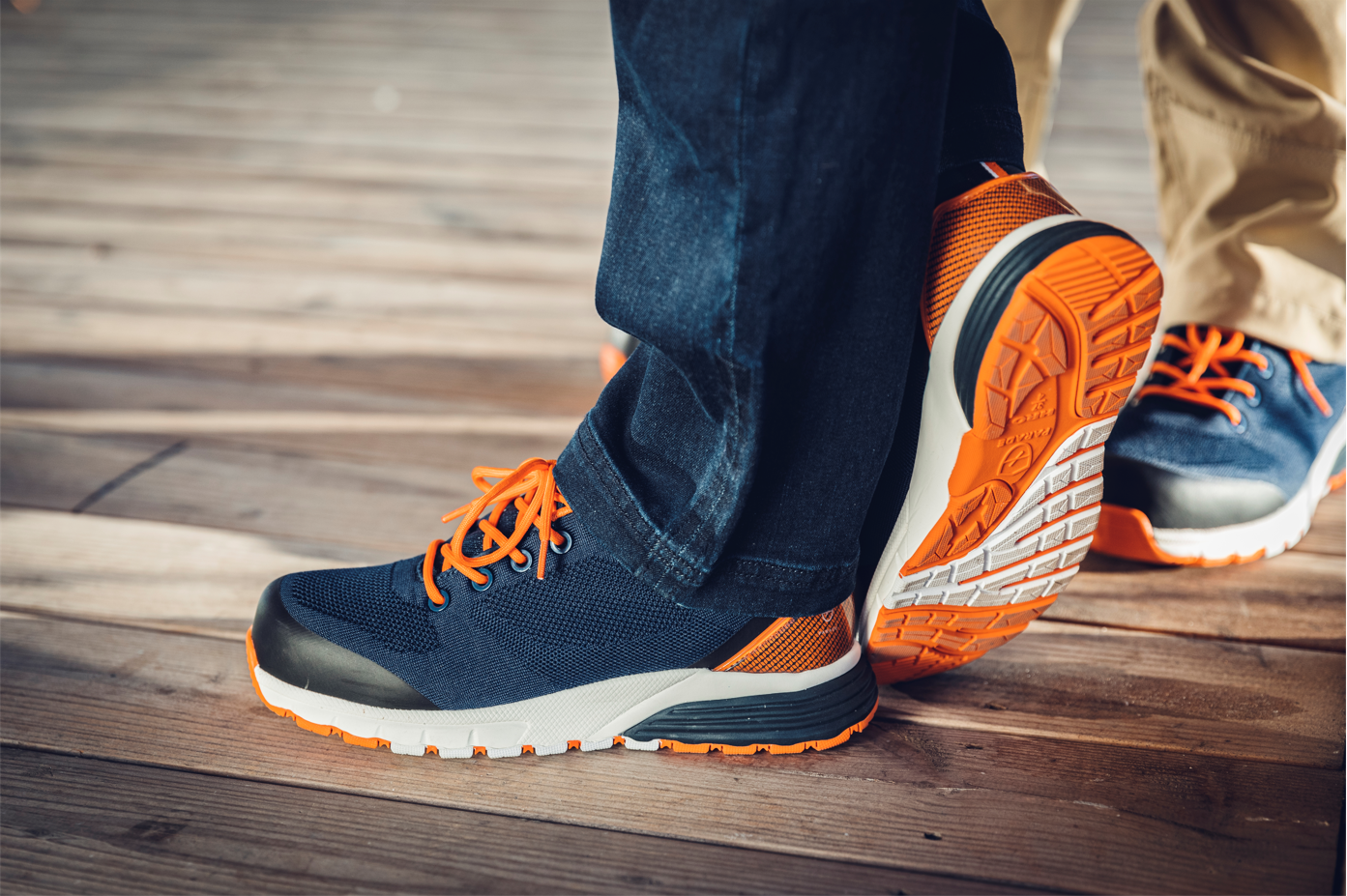
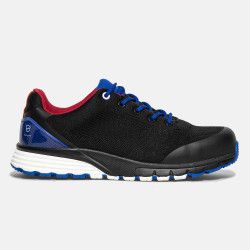
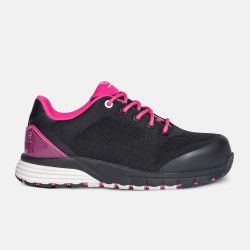
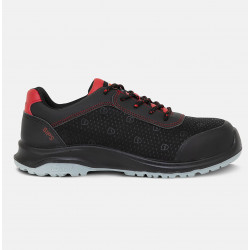
Inspired by the world of running, this low safety shoe is ultra-flexible, lightweight and modern. Its knitted mesh upper and textile lining provide maximum ventilation, keeping feet dry all day long. Seamless to reduce heat build-up. Designed for use in high-risk working environments, the S1PS safety trainer for men and women provides maximum protection against impact, crushing and the risk of perforation. A new front reinforcement, with a double TPU plate to ensure robustness and durability.
The EVA/rubber combination in the sole promises lightness, heat resistance and grip. With no metal components, this Parade shoe lets you pass through security checkpoints without triggering them.
SLALUM protects you in all your professional activities, particularly in the construction, logistics, industry, retail and distribution sectors, as well as in the food and catering industries.
> RACER, the shoe with all the options
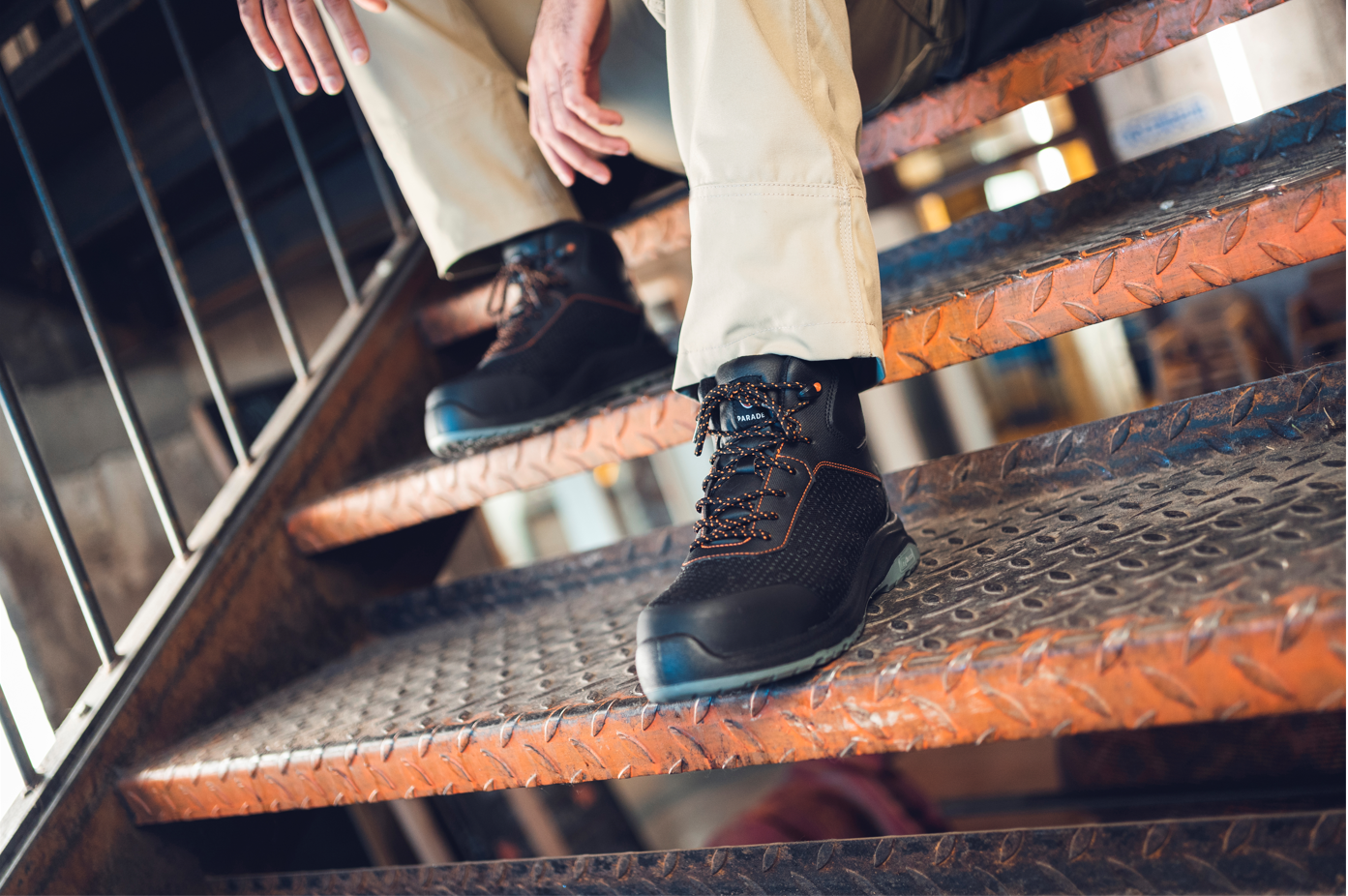
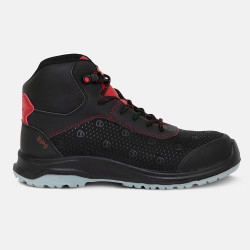
Everyday sports enthusiasts will love the Racer high-top safety trainers! These safety shoes comply with the EN ISO 20345: 2022 standard and are marked S1PS, FO, SR, CI and HI. They are breathable and high-performance, yet affordable.
Derived from the Racing range, which focuses on flexibility and reliability, Racer includes the following Parade technologies:
> BE-FLEX 2.0: an exclusive shape of the sole and skate for better forefoot flexion and therefore greater flexibility when walking;
> DRS 2 (Delete Resonance System), a cavity under the heel that supports the heel in its shock-absorbing role;
> VPS SYSTEM (Suspended Plantar Arch), which follows the natural arch of the foot for long-lasting comfort, even when standing for long periods;
> a SHIELD-ONE canvas upper, an exclusive Parade material that is breathable and highly resistant to abrasion.
These high-rise safety shoes are lightweight, flexible, breathable and non-magnetic. Ideal for professional men and women in a wide range of sectors: industry, logistics, retail and distribution, construction.
If you like the look of this model, it is also available in a low version: Ride.
our non-professional point
When you leave work wearing safety shoes, the law does not prohibit you from driving with them on.
In fact, according to article R412-6 of the Highway Code, ‘All drivers must be constantly in a condition and position to carry out all the manoeuvres required of them conveniently and without delay. His possibilities of movement and his field of vision must not be reduced by the number or position of passengers, by the objects carried or by the affixing of non-transparent objects to the windows’. Thus, safety footwear is not prohibited as long as it does not impede the wearer's mobility while driving.
As safety footwear is made up of robust protective elements, this can alter the driver's sensitivity, so it is the driver's responsibility to judge whether or not he is able to drive with his safety footwear on.

 Men
Men
 Woman
Woman
 News
News
 Work shoes
 Accessories
 French sole
 Safety sneakers
 Equestrian range
 FACOM
FACOM
 Activities
 Safety level
 Videos
 Men
Men
 Women
Women
 NEW
NEW
 Luggage
 Standards
 Activities
 Videos
 Our technologies
 Safety levels
 Parade
 CSR strategy